Leg day… It’s a phrase that can strike fear into the hearts of even the most dedicated gym-goers. But let’s be real, strong legs aren’t just about aesthetics; they’re the foundation for so many daily activities and athletic endeavors.
I’ve been dabbling in home workouts lately, and I’ve discovered some seriously effective leg exercises you can do right in your living room. Forget those crowded gyms and expensive equipment – all you need is a little space and some determination.
Honestly, I was surprised by how much I could feel the burn without even stepping foot outside. And according to the latest fitness trends, bodyweight exercises are making a huge comeback, with experts predicting even more emphasis on functional fitness in the future.
So, if you’re ready to sculpt those legs and boost your overall fitness, let’s dive into some killer home leg workouts. Let’s get the specifics right here.
Alright, let’s build those legs with some killer home workouts!
Elevate Your Leg Day: The Power of Plyometrics
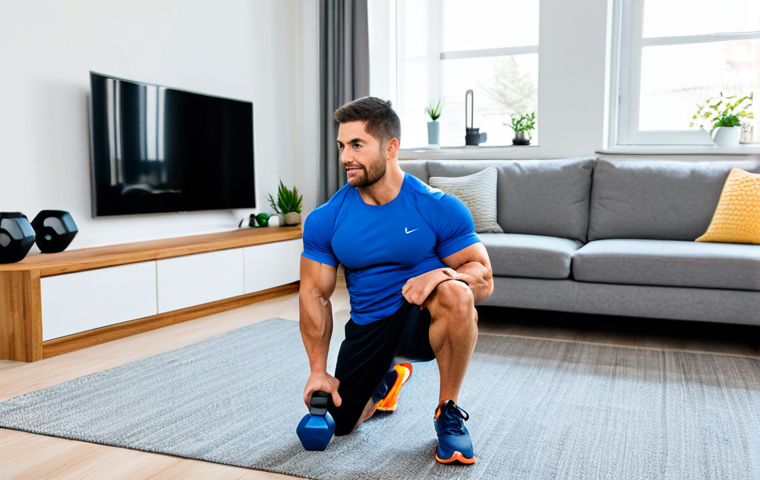
Plyometrics, or jump training, is seriously underrated for leg day. I remember the first time I tried incorporating plyo into my routine – I was sore for days!
But the results were incredible. Not only did I feel more powerful, but my legs also looked more defined. It’s all about explosive movements that challenge your muscles in a whole new way.
Plus, it gets your heart pumping, making it a great cardio workout too!
Jump Squats: Explode into Strength
Jump squats are a fantastic way to add intensity to the classic squat. Start with your feet shoulder-width apart, lower into a squat position, and then explode upwards, jumping as high as you can.
When you land, immediately go back into the squat position. I find that aiming for 3 sets of 10-12 reps really gets my quads and glutes firing. The key is to focus on a soft landing to protect your knees.
A little tip I picked up: visualize yourself jumping onto a small box – it helps with form and explosiveness.
Lunge Jumps: Agility and Power Combined
Lunge jumps are another plyometric staple. Start in a lunge position with one leg forward and the other back. Then, jump and switch your legs in the air, landing in a lunge position with the opposite leg forward.
It’s a challenging exercise that requires coordination and balance, but the benefits are worth it. Aim for 3 sets of 10-12 reps per leg. Personally, I struggled with these at first, but after a few weeks, I noticed a huge improvement in my balance and agility.
Box Jumps: Unleash Your Inner Athlete
If you have a sturdy box or step, box jumps are an excellent choice. Start with your feet shoulder-width apart, stand facing the box, and then jump onto the box, landing softly in a squat position.
Step back down and repeat. Start with a lower box height and gradually increase it as you get stronger. I remember the first time I cleared a 24-inch box – it was such a confidence booster!
Aim for 3 sets of 8-10 reps.
Mastering the Single-Leg Stance: Balance and Strength
Don’t underestimate the power of single-leg exercises! These are fantastic for improving balance, stability, and unilateral strength (strength on one side of your body).
I’ve noticed a significant improvement in my stability since incorporating single-leg exercises into my routine. Plus, they help prevent injuries by strengthening the muscles around your joints.
Single-Leg Squats: A True Test of Strength
Single-leg squats are a challenging exercise that requires a lot of practice. Start by standing on one leg with your other leg extended in front of you.
Then, lower yourself down as far as you can while maintaining balance. If you’re new to this exercise, you can hold onto a chair or wall for support. Aim for 3 sets of as many reps as you can with good form.
Honestly, I still struggle with these sometimes, but I keep pushing myself to improve.
Bulgarian Split Squats: The Glute Activator
Bulgarian split squats are a killer exercise for your glutes and quads. Place one foot on a bench or chair behind you, and then lower yourself down into a lunge position.
Keep your front knee behind your toes and maintain a straight back. Aim for 3 sets of 10-12 reps per leg. I’ve found that focusing on squeezing my glutes at the top of the movement really maximizes the effectiveness of this exercise.
Single-Leg Deadlifts: Hamstring Heaven
Single-leg deadlifts are a great way to target your hamstrings and glutes while also improving your balance. Hold a dumbbell or kettlebell in one hand and stand on the opposite leg.
Then, hinge at your hips, lowering the weight towards the ground while keeping your back straight and your core engaged. Aim for 3 sets of 10-12 reps per leg.
I love this exercise because it works so many different muscle groups at once.
The Classic Compound Moves: Your Foundation for Strength
No leg workout is complete without the classic compound exercises. These are the exercises that work multiple muscle groups at once, giving you the most bang for your buck.
Squats, lunges, and deadlifts are the foundation of any good leg workout, and they’re just as effective at home as they are in the gym.
Squats: The King of All Exercises
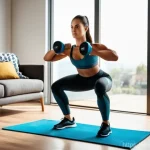
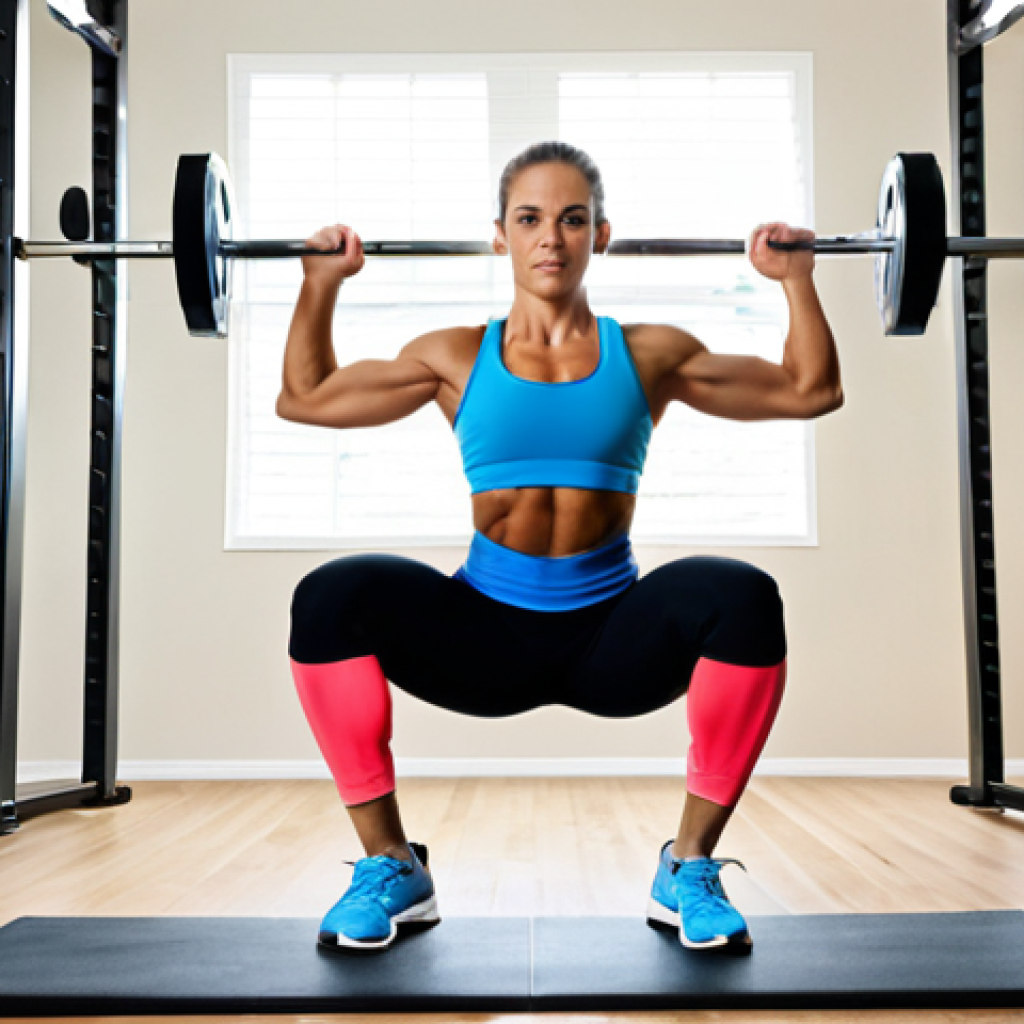
Squats are the ultimate leg exercise, working your quads, glutes, and hamstrings. Start with your feet shoulder-width apart, lower yourself down as if you’re sitting in a chair, and then stand back up.
Keep your back straight and your core engaged. Aim for 3 sets of 12-15 reps. I like to vary my squats by doing different variations like sumo squats or goblet squats to target different muscle groups.
Lunges: A Versatile Leg Builder
Lunges are a fantastic exercise for targeting your quads, glutes, and hamstrings. Step forward with one leg and lower yourself down until both knees are bent at 90 degrees.
Keep your front knee behind your toes and maintain a straight back. Aim for 3 sets of 10-12 reps per leg. Walking lunges are a great way to add intensity to this exercise.
Glute Bridges: Your Secret Weapon for a Stronger Posterior
Glute bridges are an excellent exercise for isolating your glutes and hamstrings. Lie on your back with your knees bent and your feet flat on the floor.
Then, lift your hips off the ground, squeezing your glutes at the top of the movement. Hold for a few seconds and then lower back down. Aim for 3 sets of 15-20 reps.
I like to add a resistance band around my knees to make this exercise even more challenging.
Understanding Muscle Groups and Exercise Types
Here’s a table to give you a clearer picture of which muscle groups are targeted by different exercises, and whether they are considered compound or isolation exercises.
| Exercise | Muscle Group Targeted | Type |
|---|---|---|
| Squats | Quads, Glutes, Hamstrings | Compound |
| Lunges | Quads, Glutes, Hamstrings | Compound |
| Glute Bridges | Glutes, Hamstrings | Isolation |
| Single-Leg Squats | Quads, Glutes, Hamstrings, Core | Compound |
| Calf Raises | Calves | Isolation |
The Power of Isometric Holds: Building Endurance and Control
Isometric exercises involve holding a muscle contraction for a certain period of time. These are great for building endurance, improving muscle control, and increasing time under tension.
I’ve found that incorporating isometric holds into my leg workouts has really helped me push through those last few reps.
Wall Sits: Embrace the Burn
Wall sits are a classic isometric exercise that targets your quads. Stand with your back against a wall and lower yourself down into a seated position, with your knees bent at 90 degrees.
Hold this position for as long as you can, aiming for 30-60 seconds. I like to challenge myself by trying to hold the position for longer each time.
Lunge Holds: Deepen the Challenge
Lunge holds are another great isometric exercise for your quads, glutes, and hamstrings. Step forward into a lunge position and hold the position for as long as you can, maintaining good form.
Aim for 30-60 seconds per leg. I’ve found that focusing on my breathing helps me get through the discomfort.
Calf Raise Holds: Isolate and Strengthen
Calf raise holds target your calf muscles. Stand on a slightly elevated surface, like a book or a step, and raise up onto your toes. Hold this position for as long as you can, feeling the burn in your calves.
Aim for 30-60 seconds. I often do these while brushing my teeth to sneak in some extra calf work.
Don’t Neglect Your Calves: Strength and Definition
Calves are often overlooked in leg workouts, but they’re an important muscle group for overall leg strength and aesthetics. Strong calves not only look great but also improve your ankle stability and athletic performance.
I made the mistake of neglecting my calves for years, and I regret it! Now, I make sure to include calf exercises in every leg workout.
Standing Calf Raises: A Classic for a Reason
Standing calf raises are a simple yet effective exercise for targeting your calf muscles. Stand with your feet shoulder-width apart and raise up onto your toes, squeezing your calves at the top of the movement.
Lower back down and repeat. Aim for 3 sets of 15-20 reps. I like to do these on a slightly elevated surface to increase the range of motion.
Seated Calf Raises: Focus on Soleus
Seated calf raises target your soleus muscle, which is located underneath your gastrocnemius (the larger calf muscle). Sit on a bench or chair with your knees bent and your feet flat on the floor.
Place a weight plate or dumbbell on your thighs and raise up onto your toes, squeezing your calves at the top of the movement. Lower back down and repeat.
Aim for 3 sets of 15-20 reps. This is a great exercise for adding definition to your lower calves.
Jump Rope: A Fun and Effective Calf Workout
Jump rope is not only a great cardio workout but also a fantastic way to work your calves. The constant jumping and landing engages your calf muscles, helping to build strength and endurance.
Aim for 10-15 minutes of jump rope, varying your technique with different jumps and footwork patterns. I find that jump rope is a fun and engaging way to end my leg workouts.
Progressive Overload: The Key to Continuous Gains
Progressive overload is the principle of gradually increasing the stress on your muscles over time to stimulate growth and strength gains. This can be done by increasing the weight, reps, sets, or difficulty of your exercises.
I always make sure to track my progress and gradually increase the challenge to keep my muscles adapting and growing.
Increase Reps and Sets: A Simple Starting Point
One of the easiest ways to implement progressive overload is to simply increase the number of reps and sets you perform. If you’re currently doing 3 sets of 10 reps, try increasing it to 3 sets of 12 reps, or even 4 sets of 10 reps.
This will increase the overall volume of your workout, leading to greater muscle growth.
Add Resistance: The Power of Weight
Adding resistance to your exercises is another effective way to implement progressive overload. This can be done by using dumbbells, kettlebells, resistance bands, or even just household items like water bottles or cans.
Gradually increase the weight you’re lifting over time to challenge your muscles and stimulate growth.
Change Up Your Exercises: Keep Your Body Guessing
Varying your exercises is another great way to implement progressive overload. By introducing new exercises or variations of existing exercises, you can target your muscles in different ways and prevent plateaus.
This will keep your body guessing and ensure that you continue to make progress. For instance, I sometimes substitute regular squats with pistol squats for an added challenge.
Alright, let’s build those legs with some killer home workouts!
Elevate Your Leg Day: The Power of Plyometrics
Plyometrics, or jump training, is seriously underrated for leg day. I remember the first time I tried incorporating plyo into my routine – I was sore for days! But the results were incredible. Not only did I feel more powerful, but my legs also looked more defined. It’s all about explosive movements that challenge your muscles in a whole new way. Plus, it gets your heart pumping, making it a great cardio workout too!
Jump Squats: Explode into Strength
Jump squats are a fantastic way to add intensity to the classic squat. Start with your feet shoulder-width apart, lower into a squat position, and then explode upwards, jumping as high as you can. When you land, immediately go back into the squat position. I find that aiming for 3 sets of 10-12 reps really gets my quads and glutes firing. The key is to focus on a soft landing to protect your knees. A little tip I picked up: visualize yourself jumping onto a small box – it helps with form and explosiveness.
Lunge Jumps: Agility and Power Combined
Lunge jumps are another plyometric staple. Start in a lunge position with one leg forward and the other back. Then, jump and switch your legs in the air, landing in a lunge position with the opposite leg forward. It’s a challenging exercise that requires coordination and balance, but the benefits are worth it. Aim for 3 sets of 10-12 reps per leg. Personally, I struggled with these at first, but after a few weeks, I noticed a huge improvement in my balance and agility.
Box Jumps: Unleash Your Inner Athlete
If you have a sturdy box or step, box jumps are an excellent choice. Start with your feet shoulder-width apart, stand facing the box, and then jump onto the box, landing softly in a squat position. Step back down and repeat. Start with a lower box height and gradually increase it as you get stronger. I remember the first time I cleared a 24-inch box – it was such a confidence booster! Aim for 3 sets of 8-10 reps.
Mastering the Single-Leg Stance: Balance and Strength
Don’t underestimate the power of single-leg exercises! These are fantastic for improving balance, stability, and unilateral strength (strength on one side of your body). I’ve noticed a significant improvement in my stability since incorporating single-leg exercises into my routine. Plus, they help prevent injuries by strengthening the muscles around your joints.
Single-Leg Squats: A True Test of Strength
Single-leg squats are a challenging exercise that requires a lot of practice. Start by standing on one leg with your other leg extended in front of you. Then, lower yourself down as far as you can while maintaining balance. If you’re new to this exercise, you can hold onto a chair or wall for support. Aim for 3 sets of as many reps as you can with good form. Honestly, I still struggle with these sometimes, but I keep pushing myself to improve.
Bulgarian Split Squats: The Glute Activator
Bulgarian split squats are a killer exercise for your glutes and quads. Place one foot on a bench or chair behind you, and then lower yourself down into a lunge position. Keep your front knee behind your toes and maintain a straight back. Aim for 3 sets of 10-12 reps per leg. I’ve found that focusing on squeezing my glutes at the top of the movement really maximizes the effectiveness of this exercise.
Single-Leg Deadlifts: Hamstring Heaven
Single-leg deadlifts are a great way to target your hamstrings and glutes while also improving your balance. Hold a dumbbell or kettlebell in one hand and stand on the opposite leg. Then, hinge at your hips, lowering the weight towards the ground while keeping your back straight and your core engaged. Aim for 3 sets of 10-12 reps per leg. I love this exercise because it works so many different muscle groups at once.
The Classic Compound Moves: Your Foundation for Strength
No leg workout is complete without the classic compound exercises. These are the exercises that work multiple muscle groups at once, giving you the most bang for your buck. Squats, lunges, and deadlifts are the foundation of any good leg workout, and they’re just as effective at home as they are in the gym.
Squats: The King of All Exercises
Squats are the ultimate leg exercise, working your quads, glutes, and hamstrings. Start with your feet shoulder-width apart, lower yourself down as if you’re sitting in a chair, and then stand back up. Keep your back straight and your core engaged. Aim for 3 sets of 12-15 reps. I like to vary my squats by doing different variations like sumo squats or goblet squats to target different muscle groups.
Lunges: A Versatile Leg Builder
Lunges are a fantastic exercise for targeting your quads, glutes, and hamstrings. Step forward with one leg and lower yourself down until both knees are bent at 90 degrees. Keep your front knee behind your toes and maintain a straight back. Aim for 3 sets of 10-12 reps per leg. Walking lunges are a great way to add intensity to this exercise.
Glute Bridges: Your Secret Weapon for a Stronger Posterior
Glute bridges are an excellent exercise for isolating your glutes and hamstrings. Lie on your back with your knees bent and your feet flat on the floor. Then, lift your hips off the ground, squeezing your glutes at the top of the movement. Hold for a few seconds and then lower back down. Aim for 3 sets of 15-20 reps. I like to add a resistance band around my knees to make this exercise even more challenging.
Understanding Muscle Groups and Exercise Types
Here’s a table to give you a clearer picture of which muscle groups are targeted by different exercises, and whether they are considered compound or isolation exercises.
| Exercise | Muscle Group Targeted | Type |
|---|---|---|
| Squats | Quads, Glutes, Hamstrings | Compound |
| Lunges | Quads, Glutes, Hamstrings | Compound |
| Glute Bridges | Glutes, Hamstrings | Isolation |
| Single-Leg Squats | Quads, Glutes, Hamstrings, Core | Compound |
| Calf Raises | Calves | Isolation |
The Power of Isometric Holds: Building Endurance and Control
Isometric exercises involve holding a muscle contraction for a certain period of time. These are great for building endurance, improving muscle control, and increasing time under tension. I’ve found that incorporating isometric holds into my leg workouts has really helped me push through those last few reps.
Wall Sits: Embrace the Burn
Wall sits are a classic isometric exercise that targets your quads. Stand with your back against a wall and lower yourself down into a seated position, with your knees bent at 90 degrees. Hold this position for as long as you can, aiming for 30-60 seconds. I like to challenge myself by trying to hold the position for longer each time.
Lunge Holds: Deepen the Challenge
Lunge holds are another great isometric exercise for your quads, glutes, and hamstrings. Step forward into a lunge position and hold the position for as long as you can, maintaining good form. Aim for 30-60 seconds per leg. I’ve found that focusing on my breathing helps me get through the discomfort.
Calf Raise Holds: Isolate and Strengthen
Calf raise holds target your calf muscles. Stand on a slightly elevated surface, like a book or a step, and raise up onto your toes. Hold this position for as long as you can, feeling the burn in your calves. Aim for 30-60 seconds. I often do these while brushing my teeth to sneak in some extra calf work.
Don’t Neglect Your Calves: Strength and Definition
Calves are often overlooked in leg workouts, but they’re an important muscle group for overall leg strength and aesthetics. Strong calves not only look great but also improve your ankle stability and athletic performance. I made the mistake of neglecting my calves for years, and I regret it! Now, I make sure to include calf exercises in every leg workout.
Standing Calf Raises: A Classic for a Reason
Standing calf raises are a simple yet effective exercise for targeting your calf muscles. Stand with your feet shoulder-width apart and raise up onto your toes, squeezing your calves at the top of the movement. Lower back down and repeat. Aim for 3 sets of 15-20 reps. I like to do these on a slightly elevated surface to increase the range of motion.
Seated Calf Raises: Focus on Soleus
Seated calf raises target your soleus muscle, which is located underneath your gastrocnemius (the larger calf muscle). Sit on a bench or chair with your knees bent and your feet flat on the floor. Place a weight plate or dumbbell on your thighs and raise up onto your toes, squeezing your calves at the top of the movement. Lower back down and repeat. Aim for 3 sets of 15-20 reps. This is a great exercise for adding definition to your lower calves.
Jump Rope: A Fun and Effective Calf Workout
Jump rope is not only a great cardio workout but also a fantastic way to work your calves. The constant jumping and landing engages your calf muscles, helping to build strength and endurance. Aim for 10-15 minutes of jump rope, varying your technique with different jumps and footwork patterns. I find that jump rope is a fun and engaging way to end my leg workouts.
Progressive Overload: The Key to Continuous Gains
Progressive overload is the principle of gradually increasing the stress on your muscles over time to stimulate growth and strength gains. This can be done by increasing the weight, reps, sets, or difficulty of your exercises. I always make sure to track my progress and gradually increase the challenge to keep my muscles adapting and growing.
Increase Reps and Sets: A Simple Starting Point
One of the easiest ways to implement progressive overload is to simply increase the number of reps and sets you perform. If you’re currently doing 3 sets of 10 reps, try increasing it to 3 sets of 12 reps, or even 4 sets of 10 reps. This will increase the overall volume of your workout, leading to greater muscle growth.
Add Resistance: The Power of Weight
Adding resistance to your exercises is another effective way to implement progressive overload. This can be done by using dumbbells, kettlebells, resistance bands, or even just household items like water bottles or cans. Gradually increase the weight you’re lifting over time to challenge your muscles and stimulate growth.
Change Up Your Exercises: Keep Your Body Guessing
Varying your exercises is another great way to implement progressive overload. By introducing new exercises or variations of existing exercises, you can target your muscles in different ways and prevent plateaus. This will keep your body guessing and ensure that you continue to make progress. For instance, I sometimes substitute regular squats with pistol squats for an added challenge.
Wrapping Up
So there you have it – a comprehensive guide to building stronger legs at home. Remember, consistency is key. Incorporate these exercises into your routine a few times a week, and you’ll start to see results. Don’t be afraid to experiment and find what works best for you. Happy training!
Useful Tips to Know
1. Warm-up before each workout with some light cardio and dynamic stretching to prepare your muscles and prevent injuries.
2. Cool down after each workout with some static stretching to improve flexibility and reduce muscle soreness.
3. Stay hydrated by drinking plenty of water throughout the day, especially before, during, and after your workouts.
4. Listen to your body and take rest days when needed to allow your muscles to recover and rebuild.
5. Consider consulting with a certified personal trainer or healthcare professional to get personalized advice and guidance.
Key Takeaways
Remember to focus on compound exercises like squats and lunges for overall leg strength. Don’t forget isolation exercises like calf raises to target specific muscle groups. Incorporate plyometrics and isometric holds for added intensity and endurance. And always prioritize progressive overload to continue making gains over time.
Frequently Asked Questions (FAQ) 📖
Q: What’s the best way to warm up before a home leg workout?
A: I’ve found that a dynamic warm-up works wonders. Start with some light cardio like jogging in place or jumping jacks for about 5 minutes to get your blood flowing.
Then, move on to dynamic stretches like leg swings, hip circles, and walking lunges. These movements increase your range of motion and prepare your muscles for the workout ahead, reducing the risk of injury.
Trust me, skipping the warm-up is a recipe for a pulled hamstring – I learned that the hard way!
Q: How many times a week should I do these home leg workouts?
A: Honestly, it depends on your fitness level and goals. If you’re just starting out, I’d recommend aiming for 2-3 times a week with at least one rest day in between.
This gives your muscles time to recover and rebuild. As you get stronger, you can gradually increase the frequency or intensity of your workouts. I personally aim for three times a week, but I listen to my body and take extra rest days when needed.
Overtraining is a real thing, and it’s definitely not worth it!
Q: What are some good ways to make these home leg workouts more challenging?
A: There are tons of ways to amp up the intensity! One of my favorites is adding resistance using dumbbells or resistance bands. You can also try variations of exercises like single-leg squats or jump lunges.
Slowing down the tempo of your reps can also make a huge difference – focus on controlling the movement and really feeling the burn. And don’t forget about increasing the number of reps or sets you do.
I usually start with 3 sets of 10-12 reps for each exercise, but I’m constantly trying to push myself to do more.
📚 References
Wikipedia Encyclopedia
구글 검색 결과
구글 검색 결과
구글 검색 결과
구글 검색 결과
구글 검색 결과